
With Hattiesburg already hitting 85°F in late March 2026 and South Mississippi’s peak storm season arriving in April and May, the window for a calm, unhurried roof assessment is right now. A spring roof inspection checklist built for Hattiesburg homeowners can tell you exactly what to look for before the first serious storm tests your home — and potentially save you thousands in preventable damage.
Why Spring Is the Right Time to Inspect Your Roof in South Mississippi
Spring sits in a useful gap: winter is behind you, storm season is ahead. Even mild South Mississippi winters can loosen flashing, wash away granules, and stress aging shingles — damage that’s easy to miss until a hard rain finds the weak spot. Our winter roofing issues guide covers what to watch for, and spring inspection is the natural next step.
South Mississippi’s severe weather season runs April through June. Any existing weakness in your roofing system is exactly what those storms will find. A proactive look now gives you the chance to address small issues on your terms rather than a storm’s.
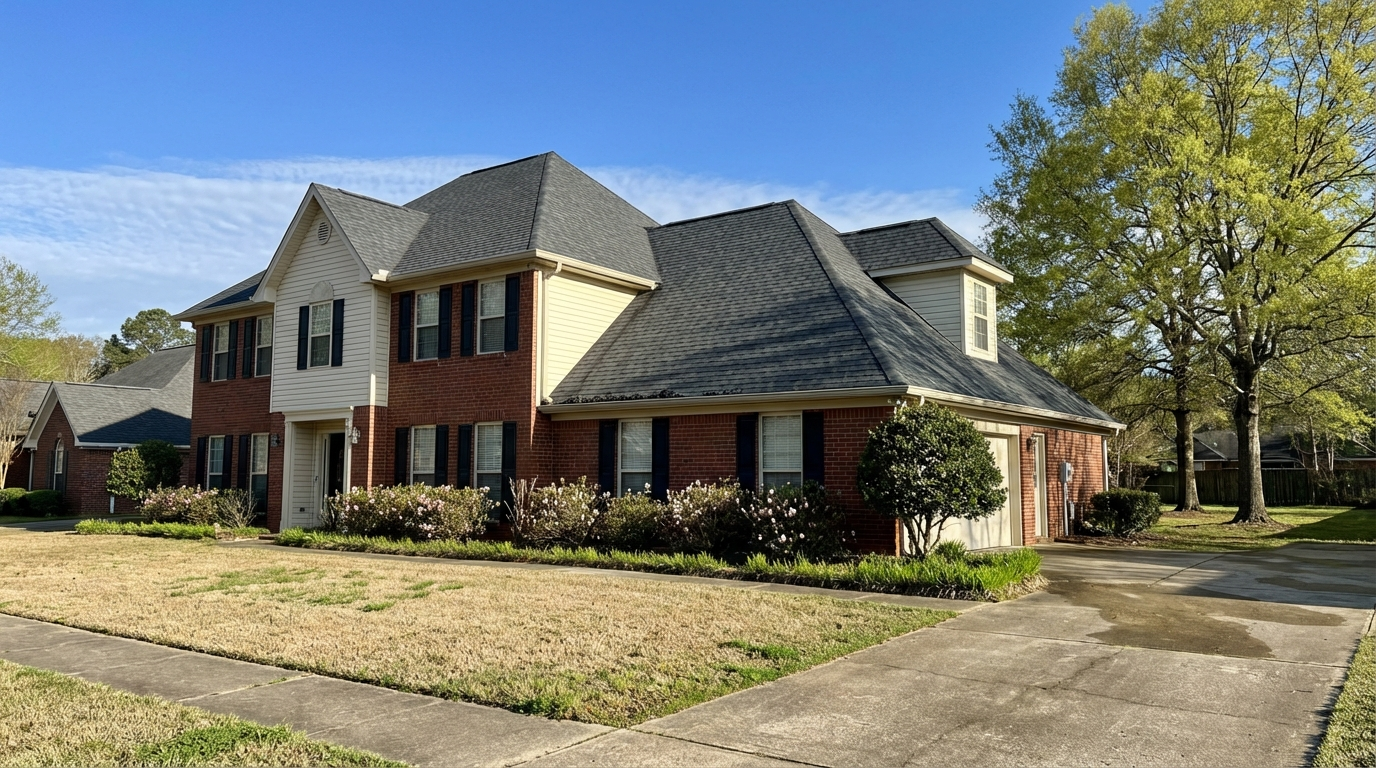
The 10-Point Spring Roof Inspection Checklist for Hattiesburg Homeowners
Work through this list from the ground — binoculars help for higher rooflines. Do not walk on your roof without proper safety equipment and training.
Exterior Visual Checks
-
Shingle condition. Look for missing, curling, or cracked shingles along the entire roofline. CertainTeed architectural shingles are common in the Hattiesburg area and show wear through granule loss and surface cracking. Check your gutters too: heavy granule accumulation after winter signals shingles nearing the end of their useful life.
-
Flashing around chimneys, vents, and skylights. Flashing failures are the most common leak entry point — and they often show up inside first. One caller from Petal noticed a damp spot near her bathroom vent; it turned out to be a flashing failure on the roof above. Daylight gaps, rust, or lifting metal around any penetration warrant a professional look.
-
Gutters and downspouts. Beyond granule accumulation, check for sagging sections, joints pulling away from the fascia, and downspouts not directing water clear of the foundation. South Mississippi’s heavy rain events dump large volumes of water quickly — gutters that are slightly compromised in dry weather fail completely in a real storm.
-
Soffit and fascia. Walk the perimeter and look up at the roof overhang. Staining, soft spots, paint bubbling, or pest activity all indicate moisture intrusion. Forrest and Lamar County humidity accelerates wood deterioration — what starts as cosmetic can become structural rot faster than in drier climates.
-
Roof valleys. Where two roof planes meet, debris collects and water pools longest. Check for damaged or missing valley flashing and clear any pine straw buildup. South Mississippi longleaf pine straw mats wet and holds moisture for days after a storm, accelerating deterioration of the roofing surface below.
Penetrations and Seals
-
Attic ventilation. A quick attic check is worth doing. Poor attic ventilation traps heat and moisture, shortening shingle life significantly. Hattiesburg’s summer heat means an attic that bakes from June through August does real cumulative damage from the inside out.
-
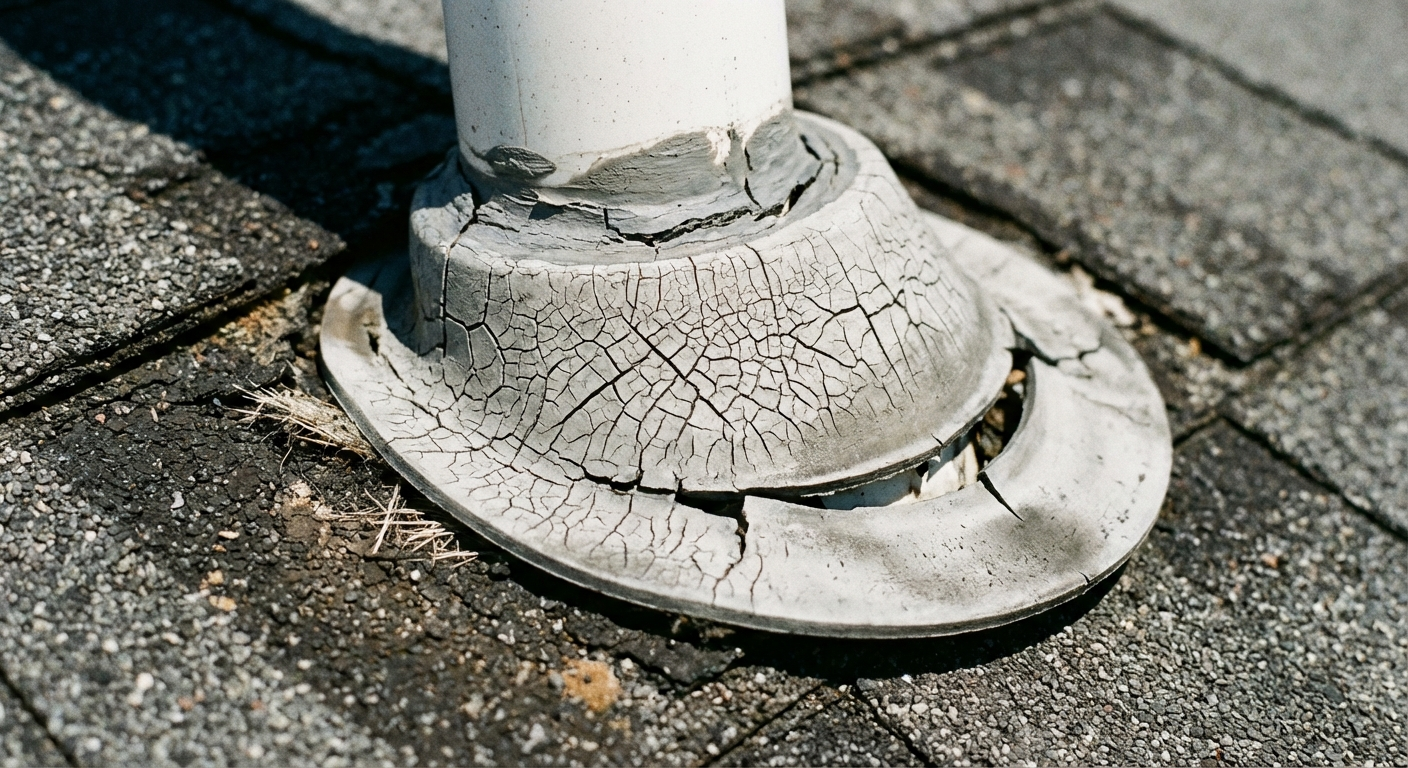
Pipe boots and penetration seals. Rubber boots around plumbing vents are a common South Mississippi failure point. UV exposure causes boots to crack and pull away from the pipe, channeling water directly into the attic. Low-visibility and easy to miss in a casual walkaround — but inexpensive to fix before it causes real damage.
- Moss or algae growth. Black streaking on shingles is algae gradually degrading the shingle surface. Moss is more aggressive, holding moisture against shingles and lifting their edges. Both are common on north-facing sections in South Mississippi’s humid climate and both are treatable — see our guide on how to clean and prevent roof moss. Left alone, either will shorten your roof’s lifespan measurably.
Interior and Attic
-
Interior ceiling and attic check. Walk your ceilings and look at the attic before stepping outside. Water stains, soft drywall, or visible daylight indicate an existing breach. Document with photos and call for an inspection promptly — in Hattiesburg’s humidity, a small breach can produce mold within 24–48 hours. Catching it in spring, before the heat sets in, matters.
-
Storm damage from the past season. Look for impact marks, bruising, or bent flashing from winter or early spring hail. Forrest and Lamar Counties see hail events more often than homeowners expect — damage is often subtle from the ground but visible to a trained inspector. It may be covered by your homeowners insurance if reported within your policy’s timeframe.
What to Do If You Find a Problem
If your walkaround raises concerns, the next step is a professional inspection, not a ladder. We offer free inspections — David Matlock is both a Licensed Mississippi Home Inspector and a Certified Roofing Contractor. If you spot potential storm damage, document it with photos and call promptly: delays can affect insurance claim eligibility. Learn more about how the insurance claims process works if a claim may be warranted.
If you’ve been approached by door-to-door contractors after a storm, read our guide on storm chasers and how to protect yourself before signing anything. For minor issues you’ve confirmed, our roof repairs page covers everything from pipe boot replacements to flashing repairs. Our guide on how to prepare your roof for spring storms pairs well with this checklist.
FAQ — Spring Roof Inspections in Hattiesburg
How often should a Hattiesburg homeowner get a roof inspection?
At minimum once a year; twice yearly is ideal — spring before storm season and fall before winter. After any storm with significant wind or hail, schedule an inspection regardless of where you are in that cycle.
Can I do a roof inspection myself?
A ground-level visual check using this checklist is safe and worth doing. Walking on your roof without proper safety equipment is not recommended. If your ground check raises concerns, call a professional. Our Hattiesburg roofing services include free inspections with no pressure attached.
Does Matlock charge for roof inspections?
No — inspections and estimates are free. The one exception: if we investigate a reported leak and find it’s unrelated to the roofing system (such as an A/C overflow pan or plumbing issue), there’s a $125 service fee. About half of leak callbacks turn out to be non-roofing issues, which is why checking your attic first can save everyone time.
What does a Matlock roof inspection include?
David Matlock examines shingles, flashing, gutters, soffit and fascia, pipe boots, ventilation, and attic condition — documenting everything with photos. If we find damage, we walk you through your options clearly, including whether it warrants an insurance claim. No pressure, no charge.
The comfortable stretch between late winter and South Mississippi’s April–June storm season is short. Whether you’re in Sumrall, Purvis, Petal, or Hattiesburg proper, now — while skies are clear — is the best time to find out what condition your roof is actually in. Call Matlock Roofing & Construction at 601-299-4048 to schedule your free spring inspection — before the storms make the decision for you.